
TMSS: A Humanitarian Movement Beyond the Conventional NGO Concept
Daily Bijoy News Correspondent:
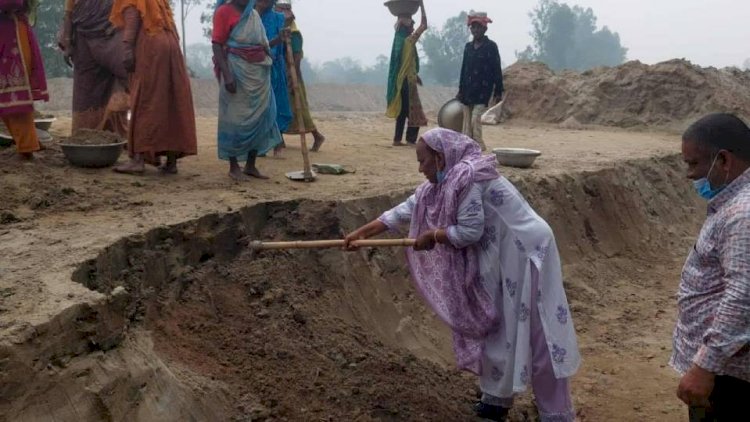
Many may identify TMSS, a top-tier and internationally standard private development organization established by Bogura's accomplished daughter, pioneer of social change and women's development in the country, eminent educationist, social worker, prominent female leadership figure, and director of Ansar-VDP Development Bank, Professor Dr. Hosne-Ara Begum, as a non-governmental organization (NGO). However, the reality is that TMSS is not a conventional or 'typical' NGO. The organization conducts activities nationwide through social and humanitarian endeavors. The origin, evolution, and operational methods of this institution are fundamentally different from the typical NGO structure in Bangladesh. It is a rebirth, nearly five decades ago, as TMSS, of that social initiative started in 1964 by the ultra-poor, destitute men and women, neglected communities, and physically disabled agricultural laborers. From its very inception, the primary goal and purpose of this organization have been to stand beside the most marginalized, powerless, and neglected communities in society. However, over time, significant changes have occurred in the organizational structure of TMSS. Currently, an abundance of educated, elite-class officers, experts, and scientists can be observed here. Consequently, within the decentralized management system, it has become increasingly difficult to effectively engage in work with those disabled and impaired working-class people from its founding era. According to the TMSS management regulations, each domain has its own independence. It was this domain-based independence that eventually led to difficulties in ensuring effective employment opportunities for that national labor class from its inception. It became challenging to secure any specific effective workplaces for them. As a way to overcome this crisis and create an alternative to begging, TMSS formed a Labor Contracting Society (LCS) in coordination with the workers. Through this LCS, TMSS has been providing year-round formal employment opportunities to an average of over two thousand neglected and overlooked laborers.
Since the programs operated under the LCS are primarily based on social protection, relatively higher subsidies are required here. For this reason, it is not possible to assign or take the department named LCS under the jurisdiction of any specific domain. Therefore, the department is being managed amid administrative complexities and structural limitations. Even at the twilight of her life, Professor Dr. Hosne-Ara Begum remains steadfast in her commitment to humanitarian service. She has kept this LCS department under her own control. Despite limited resources, manpower, and adverse realities, she continues to implement activities through regular work directives, orientation, and supervision with her dedicated staff. Under her leadership, LCS today is not merely an employment project; rather, it has become a symbol of hope for a dignified life for the neglected people of society. Experts believe this initiative of TMSS is an exceptional example of social development, which could be emulated even at the state level. Professor Dr. Hosne-Ara Begum is conducting her campaign, adapting herself to the quality of life of those neglected communities. Ordinary people consider her such realism memorable in their lives. In this context, concerned individuals believe that the people of Bogura, as well as the entire nation, will remember Dr. Hosne-Ara Begum's such humanitarian activities with respect.
Daily Bijoy News/ M A Khaleq Khan